Monday, January 24, 2022

The Reading of the Written Word


Luke 4:14-21

Epiphany 3 / Year C

The film The Black Robe tells the story of how in 1634 a Jesuit missionary carries the gospel to native people in the interior regions of what now is Canada.  In one scene the missionary tries to persuade a Huron chief to let him teach the tribe how to read and write.  The chief sees no benefit to this practice of scratching marks on paper until the Jesuit gives him a demonstration.  “Whisper to me something I do not know,” the priest says.  The chief thinks for a moment and replies, “My women’s mother died in the snow last winter.”

The Jesuit writes a sentence on a piece of paper and walks a few yards over to his colleague.  Not one word is spoken.  The colleague takes a glance at the note and says to the chief, “I am sorry to learn that your mother-in-law died in a snowstorm.”  The chief jumps back in alarm.  For the first time he has encountered the magical power of writing, which allows knowledge to travel in silence and to dart through space and time.

The earliest known use of symbols to convey meaning is found in paintings on cave walls dating back over 100,000 years.  What we would consider writing appears to have developed independently in four different locations – Mesopotamia, Egypt, China, and Southern Mexico – beginning around 3,500 BC.  Centuries ago the uneducated thought those who could read were akin to gods.  It was held to be a mysterious gift, on par perhaps with being able to predict the future.  It required special gifts – or so it was believed. 

Our readings this morning focus on the reading of the written word, and not just any word… God’s word.  Reverence for Scripture has been a prominent feature of Judaism down through the ages.  We sense this reverence in the reading from Nehemiah.  The story recounts an episode taking place in Jerusalem shortly after the return from exile.  The people gather in the square near the Water Gate and ask Ezra the priest to read the law.  There is a liturgical procession during which Ezra reads and the people respond.  Working in small groups, the Levites then teach the people about the meaning of the text they have just heard.

Three motifs stand out in this story highlighting the significance of the Torah in the life of God’s people.  First, there is a community focus to the event. The reading is not simply relegated to scholars, spiritual leaders, or those in the upper echelon of society.  All the people are present – men, women, and children.  Second, the story emphasizes the importance of understanding what is read.  The long reading is divided up into smaller, more manageable parts.  It is then interpreted so people can understand what they have heard.  And did you catch how they misinterpret the meaning at first; thinking it indicates God is unhappy with them?  “Not so,” says Ezra, “We will celebrate, for the joy of the Lord is our strength.”  Finally, the story demonstrates the need to act on what has been read.  Understanding is not enough.  St. James wrote, “You must not be hearers of the word only, you must also be doers of the word.” 

After contemplating God’s unfathomable glory revealed through the majesty of the heavens, the poet of the 19th Psalm reflects on the wonder that is God’s law.  It is perfect, pure, and clean.  It provides refreshment, light, and wisdom.  God’s word, the poet says, is more valuable than gold and sweeter than honey.  The poet reacts to God’s written word with an awe and wonder much like Huron tribal chief’s reaction to the missionary.

In our Gospel reading from Luke we hear again the story of Jesus reading from the Scriptures in his hometown synagogue.  The community is gathered.  Jesus will first read the text and then offer an interpretation.    He is the son of a carpenter, a local boy.  Although it appears he has received no formal training he has been absorbing teaching all of his life.  He has stolen away with the priests in the Temple.  He has become acquainted the message of John the Baptist.  But most of all, he has found the Kingdom of God in the simple, ordinary, everyday events of life – a sower scattering seed, a woman looking for a lost coin, a son being reconciled with his father.

Jesus reads the appointed lesson from the prophet Isaiah.  After the reading is concluded he offers commentary: “Today,” Jesus says, “What the prophet hoped for so many years ago, what you have just heard with your ears, has been fulfilled in me.”

Our Old Testament reading for this morning is loosely set at the dawn of one era and the sunset of another.  The Hebrew people are beginning to use parchment - written records - as a way of keeping their stories and traditions intact.  But most of the people do not read or write so they spend hours listening to those who can.

We live at the sunset of that age and the dawn of another.  Words are giving way to images; listening to viewing.  More and more reading, writing, and listening are work.  Countless seminars and books are available to help today’s public speaker capture and keep the attention of the audience.  And a growing number of seminars and business gurus are offering classes on the art and skill of listening.

All of this has powerful implications for the Episcopal Church and congregations like ours.  We seek to communicate the gospel to an age where the skills necessary to receive our kind of proclamation are increasingly out of step with the times. 

It strikes me the Liturgy of the Word is not primarily about being entertained.  It is about a community of people gathering together to hear again the sacred stories and writings of our tradition.  We cannot sit back passively and wait for them to capture our attention.  We must view this as a time of activity, a time of work, a time demanding gifts and skills which very little else in our cultures asks us to use.  If we want to be transformed by the reading and interpretation of the word, then we must approach this time both with reverence and with discipline.  Then, and only then, will it be able to grab us and possess us. 

It is our great privilege to hear the Scriptures read this morning.  It is our calling to listen for God’s voice speaking to us through them.  It is our great responsibility to endeavor to understand what they mean for us in our time.  It is our great calling to apply what we sense and what we learn to who we are and to what we do. 


Sunday, January 16, 2022

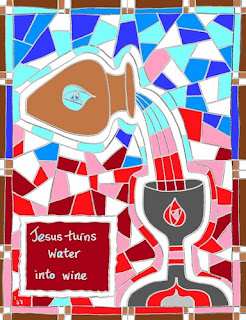
When the Wine Runs Out


John 2:1-11

Epiphany 2 / Year C

One of my colleagues made an admission on our zoom call with the bishop this past week.  She exhaled a sigh and said, “I have lost my mojo.”  She was discouraged, flat, spent.  Using the vernacular of today’s reading from the gospel, we might say the wine had run out of her life.  We all have been there and given this enduring pandemic it is becoming more and more frequent for each of us. 

For her part, the bishop was (as always) very pastoral and comforting.  Then she posed a question to us, “What do you do when you run out of mojo?”  Never one to keep my thoughts to myself, I chimed right in and described how down I was after Christmas.  Two things seemed to help me, I said.  One was talking about it in a sermon, which I did two weeks ago.  The simple act of giving a name to where you are is the beginning of getting some kind of a handle on it.  Think about Mary’s role in naming today’s challenge at Cana, “They have no wine!”  If she had not named it, Jesus would not have known to act.

The second thing that helped me was being able to celebrate communion again on Sunday morning because we had a week to distribute communion-to-go bags.  There is something very powerful “always and everywhere” to give thanks to God – even in (and especially during) these unprecedented times.  The wine may run out for a season, but it will be brief and in time discouragement will give way to celebration.

I started to read a book in preparation for what we might focus on for a Lenten program.  It is called The Gratitude Project.  It is a collection of writings and essays put out by a research group at U.C. Berkley.  This group has spent twenty years exploring “the roots of happy and compassionate individuals, strong social bonds, and altruistic behavior.”  What they call “the science of a meaningful life.”  And they have learned firsthand how gratitude has the power to transform lives, families, neighborhoods, schools, workplaces, and even nations. 

I’m only a tenth of the way into the book, so I have a lot to learn.  Already I have awakened to some things right in front of each of us; so close as to become invisible.  For example, the researchers define appreciation as “the act of acknowledging the goodness of life.”  It is not the denial of bad things and real challenges.  Rather, it is the awareness there are positive things in our life.  Gratitude, they say, goes one step further by recognizing “how positive things in our lives… are often due to forces outside ourselves, particularly the efforts of other people.”  Grateful people have a certain level of humility because they understand they could not be who they are without the contributions of others. 

Hopefully you are becoming more aware of this every time you go to the grocery store, as an example.  I am more aware of the people who are working there – cashiers on eight-hour shifts and stockers who are not simply clogging up the aisles, but stocking the goods I am there to purchase.  The empty shelves serve as a reminder this work does not just happen by itself.  I am more aware of the truckers and warehouse workers who are struggling to fill inventories.  Then there are the manufactures and farmers and so many, many other people who make it possible for me to buy a loaf of bread and a dozen eggs.  When you stop to think about it, it really is remarkable you can drive a few minutes from your home and purchase pretty much everything you need for any meal you want.  As the collect says, “help us not to forget that our common life depends on each other’s labor.”

The Gratitude Project states there are four components to gratitude:

·       What we notice for which we are grateful.  It is easier to be grateful for the extraordinary, but more difficult to be cognizant of the ordinary blessings of everyday life.

·       How we think about why we have been given these good things.  Was it a spontaneous act or did it come with strings attached?

·       How we feel about the things we have been given.   At Christmas we see commercials of a husband leading his wife out to the driveway where a brand new Lexus is parked, complete with massive red bow on top.  That has never happened to me.  Instead, I open a package from Grandma and discover she has knit me a pair of mittens.  How do you feel about the things you have been given?  Can you appreciate every act of generosity?

·       What we do to express our appreciation.  If Grandma is present, I may say “Thank you.  They look like they will be so warm.”  Or I may give her a hug.  If she is not there, I may call her on the phone or write her a note (Well, given I was raised in the north, you know I didn’t write a note!).

Does gratitude matter?  Does it make a difference in a person’s life?  One study asked a group of people to identify six goals they wanted to work on over a ten-week period.  Half of the group was also instructed to keep a Gratitude Journal in which once a week they recorded five things for which they were grateful.  Those keeping a journal made 20 percent more progress on their goals than those who did not. 

In another experiment, two four-year olds are in room playing and one child is given two treats.  Some choose to keep both while others opt to share.  When the children not given the two treats are put in a new environment with a different child and then give two treats, those who experienced sharing are significantly more likely to share than those who did.  Gratitude fosters generosity and selflessness.

As I am reading the book I am acutely aware it is written from a secular perspective.  It does not talk about faith communities and religious beliefs, which is OK because I can fill in the blanks.  It occurs to me if you want to get your body in shape you will join a fitness club.  And if you want to do something positive for your community you will find different ways to volunteer your time.  And if you want to grow your sense of gratitude you will go to church. 

Think about it, gratitude is at the very heart of who we are and what we are all about.  We are grateful to God for life and love and the goodness made known to us in creation.  And we are grateful for one another – the choir anthem, the cup of coffee, the flowers on the altar, the listening ear, the word of prayer, the attention to building and grounds… I could go on and on.  There is a reason the second half of our service is called “The Great Thanksgiving.”

But let me close by telling you this.  My phone rang just as I sat down to begin writing this sermon.  It was my colleague who had lost her mojo.  She wanted to tell me how much she appreciated me and my willingness to say I too have been discouraged.  Like me, she found naming it was the beginning of moving beyond it.  After the zoom she went for a walk – an activity which always opens her to the good things in life – and this too moved her forward.  She could not thank me enough for what I shared.  “Well,” I said to her, “Let me tell you about the sermon I am about to write…” 

Mojo returns.  Discouragement has its day and then must yield to gratitude.  Water does turn into wine!  Amazing!


Monday, January 10, 2022

Certificates, Certificates, and More Certificates


Luke 3:15-17, 21-22

Epiphany 1 / Year C

If you read what I wrote in the E-News this past Friday, you already know one of the greatest occupational hazards of being clergy is the tendency to collect a lot – and I mean A LOT! – of certificates.  I have framed and hanging on the wall of my office the following:

·    A certificate from Virginia Theological Seminary indicating I earned a Master in Divinity degree.

·    A certificate from the Diocese of Ohio indicating I am an ordained Deacon in the Episcopal Church.

·    Another certificate from Ohio indicating I am an ordained Priest.

·    A certificate from the Diocese of Virginia know as a Letter of Institution giving me the authority to serve as the Rector of the Church of the Epiphany in Richmond.

·    A certificate from Union Theological Seminary indicating I earned a Doctor of Ministry degree.

·    And finally, a Letter of Institution from this diocese giving me the authority to serve as Rector of St. Paul’s.

And, as if all this isn’t enough, I also have framed invitations to both of my ordinations.  The diocesan certificates for ordination and institution are each signed by the bishop who presided at the service.  Each bears the mark in wax of the bishop’s signet ring, which is a nice, quaint little touch.

I’ve started to wonder what will happen to all these certificates when I retire and no longer have an office.  Will I want to display them in my home?  Probably not.  And even more, what will happen to them when I am called to my heavenly home?  Will anybody want to hang them anywhere?  Again, probably not.  At best, someone might want to recycle the frames and matting, but who knows.

These certificates seem to be designed on the premise the bigger the document the more prestigious the thing it proclaims.  How interesting then the two most important certificates I have are not framed, not on display, and not very large.  They are my birth certificate (an achievement I had little to do with) and my baptismal certificate (again, my part involved being held and getting my head wet).  The birth certificate indicates the date and place of my birth, but fails to record my parent’s surprise that after the birth of a daughter a son was in route just two minutes behind.  The OB had not shared with them his hutch my mother was carrying twins.  The baptismal certificate again mentions the date (December 29, 1959), place (Sheridan Community Presbyterian Church in Pittsburgh), and officiant (Rev. Alfred C. Peterson).  It does not indicate my mood or behavior at the ceremony, but I am confident I was “the cutest baby EVER!”).    

My birth certificate indicates who I am and to which family I was born.  My baptismal certificate indicates whose I am.  I am God’s! 

I am not the first preacher to observe if we had this right the baptismal certificate would be the size of the ordination document and the ordination the size of the baptismal.  The Lutheran theologian Gordon Lathrop states ordination merely gives a clergy person a place to stand in the assembly and a function to perform.  To be in the assembly one must be baptized, and this, he says, is foremost, primary. 

From the catechism of the prayer book we learn several things happen when we are baptized (page 858):

·    We join with Christ in his death by dying to the old life of sin.

·    We rise with Christ in his resurrection to a new life of grace.

·    We receive the forgiveness of sins.

·    We are filled with the Holy Spirit.

·    We are spiritually birthed as members of God’s family, the Church.  It conveys upon us full and complete membership in the household of God.

Notice nowhere in the catechism does it indicate baptism means you will go to heaven when you die.  This sacrament is not primarily about next life life insurance, although this is how many treat it... “I am so relieved to have the baby done.” 

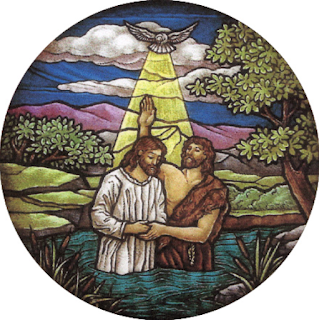
Foremost in baptism we are named and we are claimed.  This is what happens to Jesus as he rises out of the water.  God speaks, “You are my Son (naming and claiming), the beloved, with you I am well-pleased” (being known and being loved). 

Did you pick up on how these themes are present in this morning’s reading from the prophet Isaiah? 

·    I am the God who created you.

·    I am the God who formed you.

·    I am the God who redeems you.

·    I have called you by name.

·    You are mine.

·    You are precious in my sight.

·    You are honored.

·    I love you.

This is what your baptismal certificate proclaims about you.  Can any other document, description, or accolade be more significant than this? 

Perhaps, like me, you were baptized as an infant and have no recollection of the day or its meaning.  For people like us, Confirmation serves as a sacramental moment when we have the opportunity to make a mature profession of faith by stating we embrace the vows, promises, and beliefs made by our baptismal sponsors. 

Again, many a youngster has been pushed into and through Confirmation as a rite of passage or as a graduation from Sunday School.  If this is your story, has there been a moment since then when the Christian faith became your own?  Has there been a time when you realized you have been named and claimed, known and loved?  It would be nice if this all fell neatly in line in our life with the sacraments of baptism and confirmation, but it often doesn’t (in spite of our best attempts).

Still, this morning I invite you to revisit your own baptism.  Do you have a certificate or any other item documenting the occasion (a picture, a candle, a cross)?  Compare you understanding of baptism with what the Catechism teaches.  Ponder to what degree you embrace being named and claimed by God, being known by God and being loved.

“You are mine,” says the Lord, “I love you.”


Monday, January 3, 2022

The Flight of the Holy Family & The Suspension of In-Person Worship


Matthew 2:13-15, 19-23

Christmas 2 / Year C

How was your Christmas?  Mine?  Meh.  In fact, almost everyone I know had a Christmas ranging from subdued to downright joyless.  Families opted not to get together.  Travel plans were cancelled.  And, of course, here at St. Paul’s we suspended in-person worship.  In the past we derived some level of comfort and meaning from virtual worship and family zooms, but the sun has set on that day to be sure.  Virtual pales in comparison to being together.

Based on what I have learned this past week about Covid cases in our parish family, I am convinced people would have been exposed at both of our Christmas Eve services by folks who were contagious, but not symptomatic at the time.  While the adage better safe than sorry applies, it does not fill the void left empty by not celebrating Christmas Eve together in this place or by gathering free of fear with family and friends.

As I ponder today’s first reading from Jeremiah, the prophet’s vision of restoration and renewal describes so accurately the journey we have been on since returning to in-person worship last May through the Fourth Sunday of Advent:

·       A remnant of Israel will return.

·       Those who have been scattered will be gathered together.

·       The flock will have a Shepherd.

·       They will be consoled and shall be radiant.

·       They will be like a watered garden and never languish again.

·       The women will dance and the men will be merry.

·       Mourning will give way to joy, sorrow to gladness.

·       The priests will have their share of fatness (insert punchline here) and the people will be satisfied.

All of these images describe the feeling I had about our parish life as we prepared to celebrate a festive Christmas here.  We were experiencing first-hand what the author of the 84th Psalm so wonderfully describes:

How dear to me is your dwelling, O Lord of hosts!

  My soul has a desire and longing

for the courts of the Lord;

  my heart and my flesh rejoice in the living God.

Happy are they who dwell in your house!

  they will always be praising you.

For one day in your courts is better

than a thousand in my own room,

  and to stand at the threshold

of the house of my God

  than to dwell in the tents of the wicked.

After being unable for so long to worship in this space, we returned with a new and deep appreciation for this place.  After having been isolated from one another for so long, we returned with a new and deeper awareness of how much we value the people we know here.  Attendance was growing.  The Choir was back.  Families supported several outdoor special events.  Finances are holding steady.  We are pursuing a new and exciting outreach opportunity.  While many of my clergy colleagues are down in the dumps about what is (or is not) happening in the churches they serve, I am the rare priest who is optimistic and enthused about what is going on in my ministry context.

And then came Christmas.  It felt like running into a brick wall I did not see coming. 

From this morning’s Gospel reading we learn the idyllic image of the Creche scene does not linger for long.  Ominous signs abound.  The real possibility of danger permeates the air.  If you read the text carefully you will discover the magi visit Jesus, not in the stable on the night of his birth, but in a home when he is a child, most likely less than two.  So the events we read about today don’t happen in real time as rapidly as they happen in liturgical time.

Still, Joseph, who like his namesake from the Book of Genesis, is a dreamer, receives a troubling message from an angel while in a deep sleep.  I am sure he and Mary moved to flee Bethlehem with the same speed we moved to suspend in-person services.  The Holy Family, which was settled around family and friends, become refugees in Egypt (of all places) where once God’s people were enslaved.  It must have been a dark and disheartening time for them. 

Sadly, so many in our world today can empathize with them, knowing first-hand what it is to be a refugee.  Just last month Episcopal Migration Ministries resettled its 100,000 person since being formally established in 1980.  That is quite a milestone and it is good to know our church is working to welcome refugees just as various people and communities in Egypt welcomed the Holy Family.  Young Jesus experienced firsthand who he was to become: “The Light shines in the darkness and the darkness did not overcome it.”

Through the vehicle of dreams God gives Joseph both warnings and guidance.  And Joseph is wise enough and faithful enough to pay attention to what he is being told and to act upon it, no matter how unwanted or inconvenient it may be.  I can’t say God has ever spoken to me in a dream, but I do believe we are offered the same spiritual guidance and warnings through the collective insight of our parish family, and especially through the leaders on our Vestry.  Sometimes the guidance we discern is problematic, but always it is necessary.

The good news in today’s reading is found in Jeremiah’s vision of restoration and renewal.  What we experienced in the second half of 2021 is but a foretaste of what is to come.  And the good news in today’s reading is found in the joy the poet of the 84th psalm experiences by being in God’s house.  We will know this joy again, hopefully sooner rather than later.  And the good news in today’s reading is, like the Holy Family, our time as refugees is necessary for our own health and safety.  Like them, God is with us to see us through.  And like them, our time of exile one day will come to an end. 


Friday, December 24, 2021

A Girl, a Mother, a Dog, and an Unattended Moment


Christmas Eve / Year C

I want to share with you a wonderful memory which happened over 25 years ago.  I was driving on a two-lane state highway in late September with nothing but time on my hands.  I had a convertible at the time and on this sun-splashed fall afternoon I had the top down and not a single care in the world.   As I made my way north out of town a school bus pulled in front of me.  Now this was in Iowa, were the only fate worse than being stuck behind a school bus is being trapped behind a hog-hauler!  But it was such a beautiful day and I was not in any particular hurry to reach my destination, so I was not upset at the intrusion to my travels.

After about two miles the school bus began to slow down for what would be its one and only stop before turning off the road and getting out of my way.  In the distance, sitting in the grass, I could see a mother and a dog waiting.  The dog (one of those whippet breeds) spotted the bus approaching and came to life.  It spun in circles, wagged its tail, leapt in the air wildly, and barked with joyful anticipation.  As the bus came to a stop the excited canine inched as close to the vehicle as it dared, while the mother sat ten yards back on a grassy hillside. 

A little girl about kindergarten age emerged–complete with book bag, coat, and other paraphernalia–and made her way toward her mother.  The dog, who obviously had not yet adjusted to having the girl be away at school after a long summer of perpetual togetherness and play, ran up to her, jumped all around her, and gave her the biggest, wettest lick on the face you could ever imagine.  Then the two of them ran side by side to the mother who received the little girl into her arms with the kind of hug that could melt away any and all cares.  Arm in arm they began to walk down the long drive that led to their home; the dog beside them, a frenzy contained in a skin of fur. 

With that the bus pulled away (and I with it), but the scene played out before me has stayed with me all these years as vivid in my mind’s eye as the day it occurred.  It seemed to me those few seconds from the time the bus approached to the time the girl ran into her mother’s embrace were as perfect as any could be.  For one instance there was nothing but joy and happiness and peace and love.  In that moment I felt as if I had received a foretaste of heaven because it was so pure and good and it was everything we wish life could be all of the time and everywhere.

The poet T.S. Elliot described an experience like this as being an intersection of the timeless with time where the particularity of place opens onto infinity.  In Elliot’s words, we perceive this kind of event only in momentary “hints and guesses,” and not through the ordinary methods of rational knowledge or sensory perception.  In order to grasp the significance of moments like these for what they truly are, he says we need to rely upon our deeper spiritual nature.  Elliot called these experiences “unattended moments,” and they come to us as surprise, as gift, and as grace.

In 1976, the writer Michael Paffard published a book titled The Unattended Moment.  It is an anthology of writings by people who had what he describes as “brief flashes of experience... so out of the ordinary... they do not seem to fit into our ordinary pattern of experience.”  Like my experience, he says unattended moments are brief, but intense.  Paffard goes on to say,

The unattended moment may come when we are travelling in a train, ill in bed, reading a book or washing the dishes; in the most humdrum surroundings we may be ‘surprised by joy’...  If we have an unattended moment at a concert or in a picture gallery or while reading a poem we are likely to think of it as an intense aesthetic experience.  Similarly, if the moment comes in a Cathedral or at some religious ceremony we shall probably think of it as religious experience.

I think T.S. Elliot would have said the birth of Jesus was an unattended moment where the finite world opens to the Infinite.  There in the manger lay the infant human God.  Could there be a clearer sign indicating in this world there is goodness; there is beauty; there is joy; there is love?  Have innocence and wisdom, vulnerably and power, ever met so perfectly?  Has there ever been an event which has inspired the human spirit as dramatically?  Has there ever been a moment as fleeting as this one that has touched the world as deeply or affected the course of history as significantly?

The Nativity is a sign indicating good will triumph over evil and light will shine in the darkness; in our lives, in our community, throughout the world, and all of history.  Its message says we are loved so deeply no pain, no wrong, no evil, nothing imposed upon us by others and nothing imposed on us by ourselves, can separate us from God’s gentle but true love.

I pondered just how many unattended moments I have experienced in my life, but I can’t seem to figure out if it is many or if it is but a few.  T.S. Eliot lamented “we had the experience, but missed the meaning.”  I am confident the Infinite breaks into the finite all the time all around us.  We are always in the midst of God’s presence and activity, but often fail to recognize it. 

It took an angelic choir to get a few shepherds to investigate the Incarnation and it took a celestial light to garner the attention of a group of magi.  Other than this handful of people, everyone else in Bethlehem missed the meaning of the birth of a child in an animal stall.  It is easy – far too easy – to do.

One final thought about the little girl and the school bus...  The rational part of me informs my romantic side the blissful scene I witnessed between a mother and her daughter was in no way indicative of the entirety of their home life.  Surely they have their share of hardships, fights and unhappiness.  But none of that mattered during the brief respite of bliss I witnessed on that fall afternoon. 

Though it was in no way as significant as the Nativity, the two are similar in one narrow sense.  Both impress upon me what a line from Eucharist Prayer B attempts to describe: “We give thanks to you, O God, for the goodness and love which you have made known to us in creation.”  Praise God for such epiphanies, and praise God for this night!  My Christmas prayer for you is this season and all your life will be filled with unattended moments.


Monday, December 20, 2021

The Magnificat


Luke 1:39-55

Advent 4 / Year C

Mary and Elizabeth, cousins, meet.  Both are pregnant through unique circumstances.  Elizabeth is identified as being “old”, most likely in her early 30’s.  Until now she has been unable to conceive.  Her pregnancy is cause for great joy.  Mary is young, probably in her early teens.  While she consents to bear God’s child, her pregnancy is a source of scandal. 

When Mary leaves her home in Nazareth to visit her cousin, it is unclear who knows she is pregnant and how they feel about it.  Those in the know might have included her parents, Joachim and Anne, as well as Joseph, the man to whom she is betrothed.  Perhaps she leaves town to keep her pregnancy a secret, or at least to avoid harsh criticism.  In the years to come, town gossip holds the father of her first child is a Roman soldier.  I speculate Elizabeth may be the first person to view Mary’s pregnancy as a blessing.  Hers is quite a leap of faith.

Mary responds to her cousin’s warm welcome by signing a song – the Magnificat.  Being a so-so biblical scholar, it has always bothered me how a young woman on the spur of the moment could compose such a rich and thoughtful text.  Surely Luke, the gospel’s writer, learns of this encounter from Mary herself.  How, I wonder, does she remember the words of an off-the-cuff song she sang decades earlier?

I puzzled over this this past week and then it occurred to me this is not a “once-and-done” song.  It is something Mary probably sings over and over and over again, perhaps to welcome the new day or as a lullaby before falling asleep. 

Hannah lives eleven centuries before Mary.  Like Elizabeth, she has trouble conceiving a child until God intervenes.  When her son, Eli, is born she breaks out into song – the Song of Hannah.  Mary’s song is very much rooted in Hannah’s.  In fact, the Magnificat is like a Rite 2 version of what Hannah sings.  It is leaner and more concise, but espouses the same theology and ideas.  So Mary has a template to work with.

I also wonder if the song is a work of her own creation, or did someone teach it to her.  Could it be that Anna sings the Magnificat to Mary when Mary is a child?  If so, then Mary’s song is not a spontaneous creation, but rather an expression of something from the tradition of her people rooted deeply in the fiber of her very being. 

And while I am speculating about all of this, let me add one more possibility.  If this is a song Mary sings all the time, then it is something her child Jesus hears again and again, perhaps every day of his life.  Imagine how the Magnificat comes to shape his sense of self and worldview.

From it Jesus grows up knowing his mother feels blessed to have him.  He grows up hearing of God’s goodness and God’s mercy.  He grows up with a sense God cares for the poor, the hungry, and lowly, but shuns those who flaunt their wealth, power, and prestige.  He grows up knowing God has made a promise to his people, a promise God will keep forever.  If you pause to consider Jesus’ teachings and Jesus’ actions you will see on them the fingerprints of Mary’s song because he has been formed by it. 

At every baptism, the celebrant asks the parents and sponsors these questions:

Will you be responsible for seeing the child you present is brought up in the Christian faith and life?

Will you by your prayers and witness help this child to grow into the full stature of Christ?

Mary’s example of repetition can guide us in how to raise our children and grandchildren in the Christian faith and life.  I always enjoy hearing our children learn to say the Lord’s Prayer in church.  Typically, they are just a little louder than the rest of us because they are excited to be a part of the liturgy.  Think about how knowing the Lord’s Prayer begins to shape and form them for life.

And think about the questions of the Baptismal Covenant:

Will you continue in the apostles’ teaching and fellowship, in the breaking of the bread, and in the prayers?


Will you persevere in resisting evil, and, whenever you fall into sin, repent and return to the Lord?


Will you proclaim by word and example the Good News of God in Christ?


Will you seek and serve Christ in all persons, loving your neighbor as yourself?


Will you strive for justice and peace among all people, and respect the dignity of every human being?

What would it look like to rehearse these at home with your children and to talk about one way you lived into some aspect of this during the day?  Again, it would shape and form you and your children in a very specific way.

The only record we have of Jesus’ childhood involves going to the Temple with his family for festival and accidently being left behind.  Beyond telling us Mary and Joseph are not exactly ‘helicopter parents,’ it lets us know Jesus is raised in a faith tradition.  He knows the Scriptures and the stories of his people.  He participates in the rich liturgical life of his time.  And he develops an interior spiritual life marked by prayer and contemplation. 

When we think about Mary we can focus on many different things.  This morning I give thanks for how she raised her son in the life of faith.


Monday, December 13, 2021

John's "So What?"


Luke 3:7-18

Advent 3 / Year C

Growing up, one of my favorite reads was the Guinness Book of World Records.  I loved pouring over the various feats, acts, and oddities it recorded – like the guy who ate 63 bananas in 10 minutes and the person who achieved immortality by somehow downing 134 prunes in 105 seconds (fortunately what happened thereafter the book did not say!).  Then there was a fellow by the name of Clinton Lacey – the Rev. Clinton Lacey – who set the record for the longest sermon ever preached.  He went non-stop for 48 hours and 15 minutes.  I’m not really sure he should be in the Book of Records, but his congregation should!  What do you think, should we try to break his record today?

I’ve said before I consider it pretty amazing I get paid to live with scripture over the course of the week, ponder its meaning and message for our world today, put my thoughts into written word, and have people like you sit attentively to listen to what I have to say.  Ever since I began this wonderful occupation, I have always asked of my sermon several questions: Is it true to the readings?  Does it promote hope and health and faith?  And most important, does it answer the question “So what!”?  Beyond potentially helping you answer a Jeopardy question (He is the author of the First Song of Isaiah.  Who is Isaiah?), what difference does what I say make in your life?  Every sermon I ask myself, “So what?”

Which is a good question to put to John the Baptist this morning because his preaching takes center stage in today’s gospel reading.  Last week I described briefly the arduous journey from Jericho up to Jerusalem.  Basically, it is long and it is rugged and it is step.  The area in the wilderness where John baptized was even farther away from Jerusalem and completely remote, yet crowds made the strenuous, multi-day journey to hear him.  There must have been a “So what?” to what he was saying or no one would have bothered to make that kind of effort to go hear him.

John’s preaching would not have been graded highly by the professor who taught homiletics at my seminary.  Rule #1 is never begin a sermon by insulting your audience.  “You brood of vipers!  Who warned you to flee the wrath to come?”  He continues by dismissing everything about traditional religion they think is important: “Don’t think being an ancestor of Abraham is going to save you.” 

John’s “So what?” is this: “Bear fruits worthy of repentance.”  Individuals and groups ask him what this might look like.  “If you have two coats, give one to a person who has none.”  “If you are a tax collector, don’t take more money from people than you are supposed to take.”  “If you are a soldier, don’t use your position and power to bully people.”  Basically, John instructs folks to be decent, compassionate, and considerate.  Nothing more, nothing less, and nothing very fancy about it.

What does it say to you that people went so far out of their way to hear a sermon like this?  It tells me the sermons they were hearing in Jerusalem left a whole lot to be desired!

The religious leaders of the day were the masters of religious minutia.  They talked on and on and on about matters of little or no consequence: how many steps one could take on the Sabbath, the correct ceremonial way to clean dishes, appropriate and inappropriate clothes to wear, and on and on and on.  I suspect most people intuitively knew not much of this really mattered.  Other than to the elite religious professionals, their message – focused so heavily on rules and regulations – lacked a “So what?”. 

But not John’s.  His message is rooted in what Jesus would proclaim as the Golden Rule – do unto others as you would have them do unto you.  It is rooted in one half of what Jesus would teach is the greatest commandment – love your neighbor as yourself.

One of the things that first drew me to the Episcopal Church is its ethos, a part of which is summed up in the notion of majoring in the majors and minoring in the minors.  In other words, we find our unity in the most important aspects of the faith and allow for great latitude in the things of lesser consequence.  Unlike Rome with its edicts from on high which proclaim one size on every matter must fit all, and unlike Protestant denominations which get into dustups over differing interpretations of obscure bible verses, we focus on the core of the faith. 

A document developed in 1886 called the Chicago-Lambeth Quadrilateral identifies four things we believe are essential:

· The Holy Scriptures of the Old and New Testament as the revealed word of God.

· The Nicene Creed as a sufficient statement of faith.

· The primacy of the sacraments of Baptism and Holy Eucharist.

· The historical Episcopate locally adapted to be the manifestation of the Church.

You can find this brief document on page 876 of the Book of Common Prayer.

We Episcopalians cling to something St. Augustine exposed: “Unity in the essentials, liberty in the non-essentials, and charity in all things.”  I suspect most of us here this morning value majoring in the majors and minoring in the minors and I suspect a good number of the folks who went out to hear John felt the same.  How refreshing it must have been to listen to a sermon focused on what truly matters: bearing fruit in your life while being decent, compassionate, and considerate.

And how refreshing is it I am going to finish this sermon 48 hours and 5 minutes before Rev. Lacey finished his!